
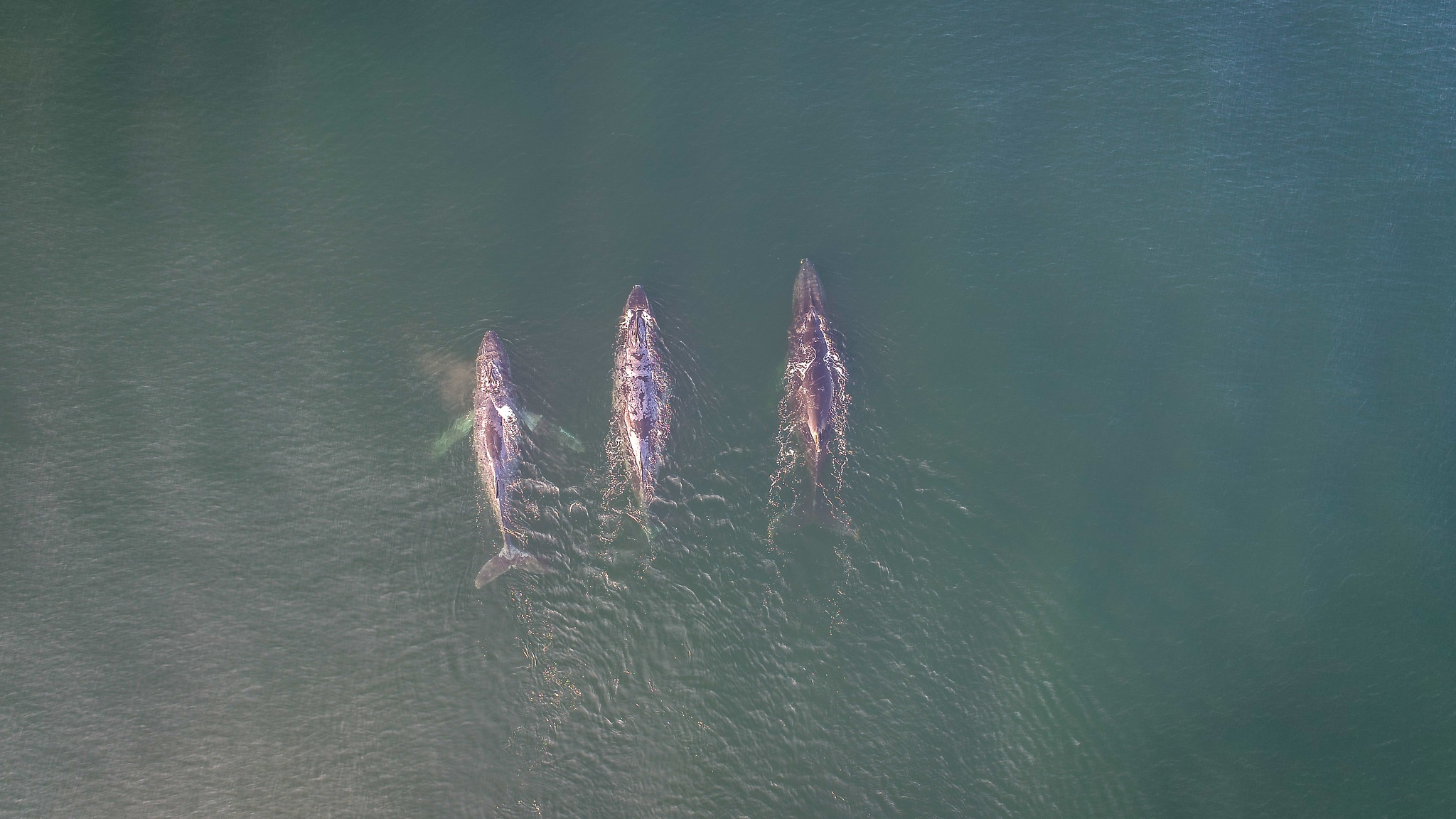
A new study published in Frontiers in Marine Science provides further evidence that Arabian Sea humpback whales are genetically distinct from humpback whale populations elsewhere in the world. The findings add an important new piece to more than two decades of research documenting the unusual evolutionary, ecological and behavioural characteristics of this population, and comes at an important time as regional partners work towards implementing the Arabian Sea Humpback Whale Conservation Management Plan (CMP).
The study, “A whale apart: further evidence for genetic isolation of Arabian Sea humpback whales from other recognised subspecies,” brings together genetic data from across the global range of humpback whales, including samples from the Arabian Sea. By comparing genetic information from whales across the world’s oceans, the researchers found clear genetic differences between Arabian Sea humpback whales and other recognised humpback whale populations and the currently agreed humpback whale subspecies inhabiting the North Atlantic (Megaptera novaeangliae novaeangliae), North Pacific (M.n. kuzira), and the Southern hemisphere (M.n. australis) The results indicate that the Arabian Sea humpback whales have been following their own evolutionary path for tens of thousands of years. The study also found evidence linking contemporary Arabian Sea whales to the historic specimen described in 1883 as Megaptera indica, supporting the proposal that the population represents a distinct subspecies. Read the full study in Frontiers in Marine Science
Why does this matter for conservation?
For the Arabian Sea humpback whale, understanding its evolutionary history is not simply a question of taxonomy. The study reinforces the importance of treating this population as a distinct population with its own ecological and behavioral characteristics.
The population is small and has shown no evidence of increasing over the past two decades. At the same time, it faces a range of human-induced threats, including entanglement in fishing gear, vessel interactions and other pressures in an increasingly busy and changing marine environment. Therefore regionally coordinated conservation action is urgently needed to protect the population’s unique genetic diversity.
This is particularly relevant to the development of the Arabian Sea Humpback Whale Conservation Management Plan under the joint framework of the International Whaling Commission (IWC) and the Convention on Migratory Species (CMS). The CMP brings together range states, governments, scientists, conservation organisations and other stakeholders around a shared framework for addressing threats to the population and strengthening regional cooperation.
Earlier this year the joint IWC-CMS CMP achieved three major milestones with endorsement by the IWC Scientific Committee, following earlier endorsement by the CMS Scientific Council and CMS Conference of the Parties. The plan is now progressing through the relevant IWC processes, with implementation expected to provide a coordinated framework for conservation action across the population’s range.
The new genetic study adds weight to the scientific foundation underpinning this work. It strengthens the picture that has emerged from decades of photo-identification, genetics, acoustic monitoring, satellite tracking and ecological research. Arabian Sea humpback whales are not simply a small population of a globally distributed species. They represent a highly distinctive evolutionary and ecological lineage whose future depends on conservation action across the region.
For the Arabian Sea Whale Network, the study is therefore another reminder of the importance of connecting research with action. Continued monitoring and research will remain essential, but the growing body of evidence also provides a strong scientific basis for coordinated measures to reduce threats, protect important habitats and support the long-term recovery of this unique population.
Read the paper: A whale apart: further evidence for genetic isolation of Arabian Sea humpback whales from other recognised subspecies, Frontiers in Marine Science (2026). Read the full study